
Stroke: Symptoms, Causes, and Ayurvedic Treatment Cost
At Vaidya Healthcare, the Stroke Rehabilitation program offers comprehensive health benefits to stroke patients. Here, Ayurvedic Panchakarma therapy and physiotherapy are given to the patients for their early recovery from neuromuscular weakness. Integrative care offered by Vaidya Ayurvedic practitioners aims to improve the patient’s quality of life and sustain his well-being post-stroke. We incorporate Panchakarma therapy into the stroke-affected health regimen’s plan to restore his aggravated doshas and eliminate toxic substances from tissues at a very deep level. Apart from this, physiotherapy and Panchakarma therapy are personalized based on the individualistic constitution, health needs, age, and immune conditions.
Recognizing stroke symptoms:
There is a simple way to recognize common CVA symptoms and it is using the acronym FAST:
F- Face drooping: One side of the face might start drooping or may feel numb. Ask the person to smile to see if the smile is uneven.
A-Arm weakness: One arm may feel weak or numb. Ask the person to lift both arms and check if one drifts down.
S- Speech difficulty: Speech might start to sound slurred or unclear. Ask them to repeat simple sentences and check if they can say it correctly.
T- Time to call emergency services: If you notice any of these symptoms, immediately call emergency services as time is critical in minimizing the effects of stroke.
Symptoms like sudden weakness or numbness, balance issues, paralysis, speech difficulty, vision problems, cognitive issues, severe head ache, seizures and drowsiness can manifest as stroke. It is best to use the FAST method and seek medical help as soon as possible.
Understanding the cause of stroke:
- Ischemic stroke:
About 85% of the cases are ischemic stroke. This is caused by the blockage in a blood vessel that supplies blood to the brain. Some of the common causes include:
Thrombosis: A blood clot forming inside an artery supplying the brain, often due to the narrowing of artery from plaque build-up.
Embolism: A clot or debris breaks off and travels through the blood stream blocking a brain artery.
Small vessel disease:blockage of small arteries deep within the brain usually caused due to high blood pressure or diabetes.
- Haemorrhagic stroke:
This kind of stroke about 15% of the cases. This occurs when a blood vessel in or near the brain bursts, causing bleeding in the brain. Some of the common causes include:
Subarachnoid haemorrhage: bleeding occurring in-between the brain and the thin tissue covering it (the subarachnoid space)
Intracerebral haemorrhage: A blood vessel inside the brain bursts due to high blood pressure, trauma or blood vessel abnormality.
- Transient Ischemic Attack (TIA):
Often called as mini-stroke, it occurs when the blood flow to the brain is temporarily blocked, but the blockage clears on its own. It usually lasts for minutes to hours but doesn’t cause any severe damage. This would be a warning for future strokes.
Hypertension, heart diseases, diabetes, smoking, high cholesterol, obesity, heavy alcohol use, age, genetics are also some of the risk factors contributing to stroke. Managing these risk factors by doing yoga, meditation, quitting smoking and alcohol, taking regular health check-ups, maintain healthy weight and managing stress can significantly reduce the risk of cerebrovascular disease.
Ayurvedic perspective on stroke (Pakshaghata):
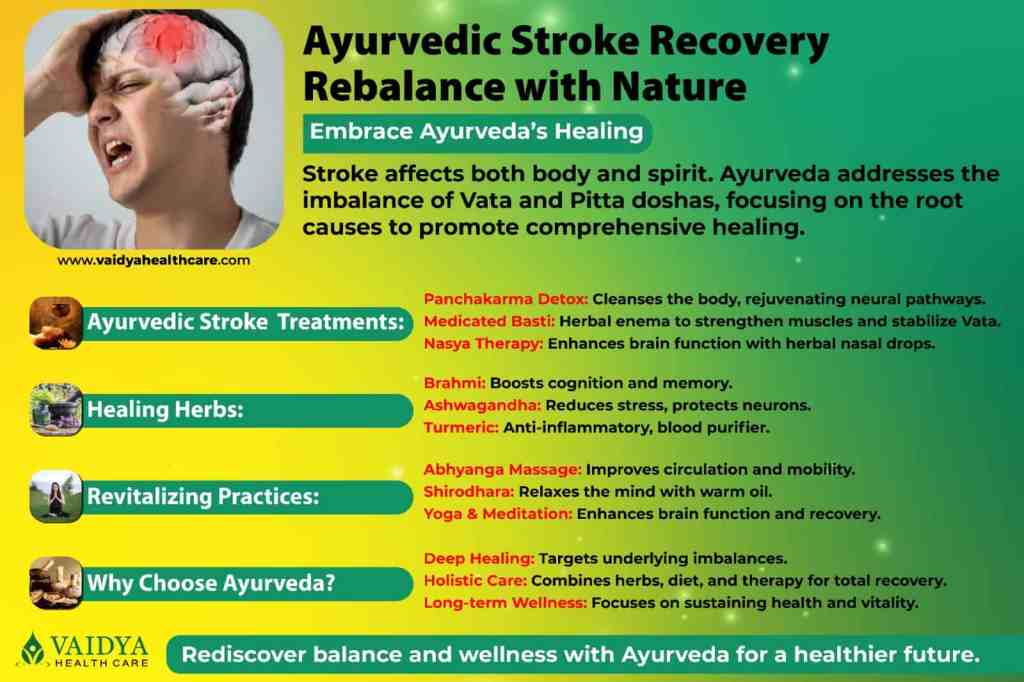
The ancient system of medicine, Ayurveda says that paralysis and stroke are interconnected and it views stroke as a disorder caused by the imbalance of body’s natural energy known as doshas. Vata dosha and pitta dosha imbalance might cause stroke.
Vata dosha imbalance: Vata governs the movement of the body, including nerve function, circulation and muscular activity. An imbalance in the Vata dosha is believed to block the flow of prana (life force) and lead to stroke.
Pitta dosha imbalance: Excessive pitta, especially in blood and bile, may lead to inflammation in blood vessels or brain which can also cause stroke.
Ayurvedic treatments for stroke aims to balance the Vata and Pitta doshas, unblock channels and restore functions in our body through detoxification therapies, diet modification and herbal remedies.
Modern medicine follows an immediate approach, solely focusing on the emergency care targeted to minimize the damage caused by stroke meanwhile Ayurveda follows a holistic approach focusing on the whole body of the person rather than curing just the damage. Ayurveda aims to treat the root cause and imbalance of the body while modern medicine focuses on symptoms relief.
Detoxification therapies:
Panchakarma:panchakarma therapy for stroke is a series of purification treatment used to detoxify body and promote recovery.
Basti (enema therapy):
Herbal oil or decoctions are administered through enema to cleanse the colon and balance the doshas.
Nasya (nasal administration):
Herbal oils are powders are administered through nasal passage to improve brain function and treat neurological disorders.
Brahmi:
Used to enhance memory and cognitive brain function, Brahmi is believed to improve brain health and aid in neurological recovery.
Ashwaganda:
It is well known for its neuroprotective properties and it also helps to improve cognitive function.
Turmeric:
It is well known for blood purification and enhancing cognitive function which can balance Vata dosha.
External therapies:
Ayurvedic massage for stroke patients:
Abhyanga:
It is a therapeutic massage using medicated oils used to improve circulation and stimulate the nervous system.
Shirodhara:
It is a process of pouring warm oil on the forehead to calm the mind and reduce stress.
Pizhichil:
It is also known as king’s treatment due to its luxurious healing effects. It involves continuous pouring of warm oil all over the body accompanied by gentle oil massage to balance Vata dosha.
Integrative rehabilitation services:
Stroke patient rehabilitation is process that involves addressing both physical and cognitive impairments resulting from a stroke. Brain damage recovery is also addressed in these rehabilitation services. Here are some of the key components of rehabilitation program:
Physical rehabilitation:
Physiotherapy for stroke recovery:
One of the primary goals of rehabilitation is to restore mobility and muscle function and physiotherapy is the key for it! Physiotherapists work alongside patients to develop a personalized routines to cater their needs.
Mobility training:
Mobility training is an essential part of stroke rehabilitation as it aims to restore a patient’s ability to walk and move around safely. This involves strengthening exercises, balance improvement and gait retraining. Through regular practice patient patients can face physical challenges in their environment without any difficulties.
Dry needling:
Dry needling is a technique where thin needles are inserted into trigger points or tight muscle areas to relieve pain and improve muscle function. By targeting specific muscles affected by stroke, dry needling improves mobility and reduces discomfort during rehabilitation exercises.
Acupuncture:
It is a traditional Chinese method where tiny needles are inserted into specific points of the body to stimulate the nervous system and enhance the flow energy. It promotes healing by increasing blood flow to the affected area and helping to restore the balance within the body.
Occupational therapy:
Occupational therapy focuses on helping stroke patients regain the ability to perform daily activities, such as dressing, eating and bathing. Occupational therapists work closely with stroke patients to adapt their living environments and introduce tools and techniques that enhance independence and quality of life.
Speech therapy and Cognitive rehabilitation:
After a stroke, many patients find it difficult to speak and also face difficulties in cognitive functions such as memory, attention and problem solving. Speech therapy helps patients improve their communication abilities including language comprehension, speech production and swallowing issues.
In the other hand, cognitive rehabilitation focuses on enhancing brain function, helping patients to regain mental clarity and improve their cognitive abilities. Therapists use targeted exercise to stimulate brain regions affected by stroke, aiming to recover the overall mental performance.
Yoga and Meditation:
Incorporating mind-body practices like yoga and meditation into rehabilitation process offers immense benefits for neurological recovery. Yoga helps in improving physical balance, strength and flexibility while reducing stress and anxiety. It also helps the brain’s ability to adapt and heal after injury, helping stroke patients regain lost functions more effectively.
Stroke prevention strategies:
- Control blood pressure: By keeping blood pressure under control through low-sodium diet, exercise and medication can control stroke effectively.
- Manage diabetes: Maintain proper blood sugar levels through diet and exercise.
- Lower cholesterol:Maintaining proper diet while reducing saturated fats can help maintain healthy fat levels.
- Quit smoking: Quitting smoking can benefit overall-health a lot and can reduce the risk of stroke significantly.
- Limit alcohol consumption: Excessive consumption of alcohol can increase blood pressure levels which can cause stroke.
- Exercise regularly:Regular physical activity can help maintain a healthy weight reducing the risk of stroke.
- Maintain a healthy weight: Being overweight can increase stroke risk, by maintaining a healthy weight through diet and physical activity is necessary.
- Healthy diet: Eating a diet rich in nutrients and fibre while avoiding processed foods can reduce the risk of stroke.
- Prevent blood clots: Medications prescribed to thin blood can reduce the risk of clots than can lead to a stroke.
- Manage healthy heart condition:Heart conditions should always be monitored and treated to reduce the risk of stroke.
A diet for stroke
Foods to Emphasize:
- Fruits: Berries, citrus fruits and apples.
- Vegetables: Leafy greens, broccoli, and bell peppers.
- Whole grains: Brown rice, quinoa, whole wheat bread, and whole grain pasta.
- Lean protein: Poultry, fish, beans, lentils, and low-fat dairy.
- Healthy fats: Nuts, seeds, avocados, and olive oil as they are rich in healthy fats.
Foods to Limit or Avoid:
- Sodium
- Saturated and trans fats: Food items such as butter, lard, processed meats and fried food.
- Cholesterol rich food
- Added sugars
- Refined carbohydrates: Limit refined grains, sugary drinks, and processed snacks.
Specific Nutrients:
- Potassium: Bananas, leafy greens, and sweet potatoes to help lower blood pressure.
- Omega-3 fatty acids: Fatty fish, flaxseeds and walnuts help reducing inflammation.
- Fiber: Grains, fruits and vegetables.
Beverages:
- Water: Drink plenty of water throughout the day.
- Limit sugary drinks such as soda, energy drinks and sweet
Vaidya Health Care for ayurvedic stroke treatment in Kerala:
At Vaidya Heath Care, we combine the ancient wisdom of Ayurveda with modern expertise to provide holistic stroke recovery. We are known for our unmatched expertise in ayurvedic stroke treatment. Our ayurvedic therapies focus on holistic recovery, making us the top choice for patients seeking a natural, non-invasive approach for healing after a stroke. We are the best ayurvedic hospital in Kerala ensuring you receive the best care possible.
Dr. Kiran B Nair
MD Ayurveda Panchakarma, BAMS
He is a renowned ayurvedic practitioner with an extensive experience in the field of Ayurveda. He is the current CEO of Vaidya Health Care at Perumbavoor, Kerala. He is widely credited for blending modern theory of health with ancient Ayurveda. His reputation as a trusted healer is built on a foundation of empathy, skill and a commitment to natural healing.
Achievements:
- MD of Sreeragam Ayur Retreat, Cochin.
- CEO of Vaidya Ayurveda Hospital.
- Fellowship Neurocare.
- Active member in the programs of Nalanda Foundation and Prithvi foundation.
- He was a part of the organisation committee in conducting ASWINI-2011, International conference held of Ayurveda by Sri Sairam Ayurveda Medical college at Chennai.
At Vaidya Health Care, we take immense pride in the positive impact we’ve had on our patient’s lives. Every recovery is a testament to the power of Ayurveda. Below are some of the success stories and heartfelt testimonials from patients who have regained their health and well-being.
Facilities and services provided:
We aim to deliver holistic care, ensuring each patient receives personalized treatment. Below is the facilities and services designed to enhance the healing journey:
Facilities:
- Modern Ayurvedic Hospital: Combines traditional Ayurveda with modern amenities for patient comfort.
- Private & Semi-Private Rooms: Spacious, well-equipped rooms for a comfortable stay.
- Therapeutic Rooms: Specialized areas for Ayurvedic treatments like massages and oil therapies.
- Yoga & Meditation Halls: Dedicated spaces for holistic wellness.
- Pharmacy: On-site Ayurvedic pharmacy for prescribed medicines.
- Physiotherapy Unit: Fully equipped for stroke and orthopedic rehabilitation.
- Dietary Services: Personalized Ayurvedic diets for healing.
- Relaxation Areas: Peaceful gardens for recovery.
Services:
- Ayurvedic Treatments: Panchakarma, detox, and rejuvenation therapies.
- Stroke Rehabilitation: Comprehensive recovery programs with external therapies and medications.
- Pain Management: Treatments for arthritis, joint pain, and chronic conditions.
- Holistic Programs: Integration of Ayurveda, yoga, and physiotherapy for overall wellness.
- Geriatric & Stress Care: Tailored programs for elderly care and stress relief.
- Detox & Rejuvenation: Personalized packages to enhance vitality and health.
Ayurveda being the ultimate cure:
Numerous studies had been conducted on ayurvedic treatment for stroke recovery proves that patients show about 50-70% improvement in motor function after 3 to 6 months of consistent ayurvedic therapy which mainly includes panchakarma therapy, herbal medicines and physical therapy. It is also reported that patients experience 60-80% improvement in speech with Nasya therapy and herbs like Brahmi within just the same period of time. Patients suffering from partial paralysis showed 40-60% improvement, alongside that, patients going through Post-Stroke Depression also showed about 50-60% reduction in symptoms which can never be achieved through modern medicine. Ayurveda has always been the answer, which just had to be uncovered.
What is the cost of Stroke Treatment in Ayurveda?
We at Vaidya Healthcare offer complete, personalized Ayurvedic stroke therapy. Our broad approach, that includes physiotherapy, Panchakarma therapy, and other tried-and-true techniques, guarantees a speedy and reasonably priced recovery. The comprehensive cost breakdown for our treatments can be found below.
Stroke Treatment Cost Overview
Stroke treatment at Vaidya Healthcare is meant to be both cost-effective and successful. The therapies chosen, the number of sessions, and the length of therapy all affect the overall cost. With fees ranging from a minimum of ₹25,000 (approx.) to a maximum of ₹6,66,900 (approx.), we offer clear pricing to accommodate diverse patient needs. Below is a comprehensive cost breakdown.
| Treatment Component | Estimated Cost (Min – Max) | Sessions Required ( Min) |
| Ayurvedic Panchakarma | ₹800 – ₹2750 | 2 to 3 sessions |
| Physiotherapy | ₹450 – ₹1200 | 2 to 3 sessions |
| Acupuncture | ₹400 – ₹900 | 1 session |
| Speech Therapy | ₹800 – ₹1250 | 1 session |
| Occupational Therapy (OT) | ₹800 – ₹1500 | 1 to 2 sessions |
| Room Rent (Daily) | ₹900 – ₹4750 | 21 to 45 days |
Duration of Treatment
The treatment typically lasts 21 to 45 days, depending on the severity of the condition and individual recovery needs.
Why Choose Vaidya Healthcare for Stroke Treatment?
- Recognized as the best ayurvedic hospital for stroke in Ernakullam.
- Proven results in improving patient outcomes through natural therapies.
- A trusted name when it comes to holistic and patient-first approach.
At Vaidya Health Care, we use traditional rehabilitation techniques to address the root cause of stroke and promote long term healing. our treatments aim to restore the balance in the body reducing the effects of stroke. Our specialized stroke treatment focuses on revitalizing both the body and mind, ensuring a comprehensive recovery process for our patients. Our team of highly skilled ayurvedic practitioners and stroke rehabilitation experts are committed to providing personalized care. Our experts not only focus on physical recovery but also emphasize mental well-being which is crucial in stroke rehabilitation.
Enquire Now for a Personalized Treatment Plan and Cost
Curious about the exact cost for your stroke treatment? Contact us today to get a detailed, personalized quote.
Contact information and consultation:
At Vaidya Health Care, we believe that true healing begins with personalized care and a holistic approach. Whether you’re seeking relief from chronic condition or looking for preventive care, our experienced practitioners are here to guide you on your path to wellness.To make it easier, we also offer online consultation and telemedicine options, so you can access expert ayurvedic care from the comfort of your home. Book your Ayurvedic consultation for stroke now and discover the ways Ayurveda can transform your life.
Authored by Dr. Kiran B
FAQ
What are the Ayurvedic treatment for brain stroke?
Panchakarma, Herbal medications, Nasya, Abhyanga along with dietary modifications can balance the doshas in the body, restoring balance and improve neurological function.
Can stroke be permanently treated?
It truly depends on the severity of the condition. However, Ayurveda can improve recovery through natural healing process preventing recurrence rather than offering a permanent cure.
Can stroke patients get back to normal?
Stroke patients can often recover significantly, but the extent of recovery depends on the severity of the symptoms and the person’s overall health. Early intervention and rehabilitation improve the chances of better recovery.
How can I sharpen my brain after a stroke?
Herbs like Brahmi, Ashwaganda; treatments like Nasya, Abhyanaga, Shirodara; Meditation and diet modification can support brain recovery and improve sharpness overtime.
Do you provide Ayurvedic treatment for stroke patients?
Yes, we do provide stroke rehabilitation through a comprehensive, individualized approach that may include Ayurvedic therapies, physiotherapy, acupuncture, occupational therapy, and other supportive rehabilitation services as appropriate. The treatment program is planned according to the patient’s medical records and onset , MRI,Current neurological status, muscle strength, power, tone, balance, speech, swallowing, mobility, and functional limitations.
How long is the duration of the stroke rehabilitation program?
Will the patient achieve complete recovery within this duration?
The duration of rehabilitation depends on severity of the stroke, the site and extent of brain involvement, time since the stroke, degree of weakness or paralysis, speech and swallowing difficulties, cognitive status, and the patient’s overall medical condition.
Before admission, we would prefer to review the patient’s CT or MRI brain reports and other relevant medical records to understand the present neurological condition and rehabilitation potential.
During the initial period of admission, the patient will be closely observed to assess how they respond to the rehabilitation program. Based on the patient’s tolerance and clinical response, the intensity and type of treatment will be progressively modified.
Complete recovery cannot be guaranteed within a fixed treatment duration, as stroke recovery varies significantly from patient to patient. Our aim is to maximize the patient’s neurological recovery, functional abilities, independence, and quality of life through an individualized rehabilitation program.
How often do you treat stroke cases, and what is your success rate?
We regularly treat stroke patients and have experience in stroke rehabilitation. Recovery depends on the time since the stroke, site and severity of the brain injury, neurological condition, and other medical problems. Therefore, recovery varies from patient to patient, and we assess each patient individually to work toward the best possible improvements.
How is stroke treatment provided through Ayurveda, acupuncture, and physiotherapy?
We provide an integrated rehabilitation approach, where Ayurveda, physiotherapy, and acupuncture are planned according to the patient’s neurological condition and functional needs.
Ayurvedic therapies and internal medicines are selected based on the patient’s condition. The treatment mainly aims to support muscle strength, reduce stiffness, improve joint mobility, promote relaxation and circulation, and support overall rehabilitation,meanwhile accupuncture and
Physiotherapy focuses on muscle strengthening, stretching, balance and coordination, posture, mobility, transfer training, standing and walking training, and improving the functional use of the affected side. The exercises are gradually progressed according to the patient’s ability.
The overall goal is to maximize neurological and functional recovery, improve independence in daily activities, and prevent secondary complications.
How is your treatment approach for patients with speech or swallowing difficulties after stroke?
Not every stroke patient will have speech or swallowing difficulties. However, some patients may develop these problems after a stroke and require proper assessment.
We have facilities for speech and swallowing rehabilitation, provided under the supervision of a qualified speech therapist.
The patient’s condition will be assessed, and appropriate speech therapy, swallowing exercises, positioning, feeding techniques, and dietary modifications will be provided as needed.
Can bladder and bowel problems after stroke improve?
Bladder and bowel dysfunction can occur in some stroke patients. Management is individualized according to the patient’s neurological status, mobility, continence, cognitive function and existing medical conditions.
Can rehabilitation help if the stroke happened several months or years ago?
Patients with chronic stroke can still benefit from structured rehabilitation. Even when the stroke occurred several months or years previously, therapy may help improve strength, balance, mobility, coordination, functional independence and management of spasticity.
The amount of improvement varies according to the patient’s existing neurological function and rehabilitation potential.
How will you monitor the patient’s progress during treatment?
The patient will be assessed regularly for changes in muscle strength, tone and spasticity, range of movement, balance, coordination, mobility, gait, hand function and activities of daily living.
Speech, swallowing, bladder and bowel function may also be monitored . The rehabilitation program will be modified according to the patient’s progress.
What happens if the patient suddenly becomes sick or develops a medical emergency?
If the patient develops a medical emergency requiring higher level medical care, the patient will be immediately transferred to an appropriate multispecialty hospital for emergency management.
Our medical team will coordinate the transfer and communicate the relevant clinical information to the receiving medical team and will be communicating the same with the family members
Who will assist the stroke patient with toileting, changing clothes, bathing, and other personal care needs?
Nursing staff are available to support patients with routine nursing and personal-care requirements .
If the patient requires continuous or additional assistance with personal care, a caretaker can be arranged separately. Caretaker charges are excluded from the treatment charges.
If the patient has slurred speech following a stroke, what rehabilitation support will be provided? Will any medication be given to improve speech?
We’d first sit down and properly assess how severe the speech and communication difficulty actually is — slurred speech can mean different things for different patients. From there, speech therapy becomes part of the rehab plan, working on clarity, articulation, oral-motor coordination, and communication more broadly. It’s not something a pill fixes on its own; the therapy itself is the main tool.
If a patient has been dealing with stroke-related difficulties for 10 years now, can treatment still help?
Yes, often it can — though how much depends a lot on where the patient stands today. We’d look at the severity of the neurological impairment, muscle strength, spasticity, mobility, and how well the patient can actually engage with therapy sessions. Even in long-standing cases, a combined therapy programme built around the individual can support better mobility, flexibility, balance, coordination, and day-to-day independence. It’s rarely a lost cause just because time has passed.
Does a stroke patient need a personal caretaker? If they don’t have one with them, will the hospital step in?
It really comes down to how dependent the patient is and how severe their condition is — that gets assessed on our end. If it turns out a caretaker is needed and the patient doesn’t have one, the hospital can arrange one.
Will the patient’s existing stroke medications be stopped once rehab starts?
No — not without the treating neurologist weighing in first. Medications shouldn’t be stopped or changed on a whim. The rehab programme is built to work alongside whatever medication plan is already in place, not replace it.
What kind of improvement can realistically come from the stroke rehabilitation programme?
Honestly, it depends on where the patient starts from, but we’re generally working toward a few things at once — walking and moving more easily, better balance so falls become less of a worry, smoother coordination, and less of that stiffness that tends to stick around after a stroke. A lot of it also comes back to independence — being able to handle daily activities without needing help for every little thing. And underneath all of that, the therapy is also giving the brain itself a better shot at recovering over time, not just the muscles.
What can Ayurvedic stroke treatment actually offer in cases like this?
It typically involves a mix tailored to the patient — Panchakarma procedures, external therapies, internal Ayurvedic medicines, and dietary guidance. For many patients this helps with muscle strength, mobility, reducing weakness, coordination, sleep quality, and even speech and general neurological function. That said, results genuinely vary from person to person, and it’s best understood as a supportive part of recovery rather than something that guarantees a specific outcome.
Stroke Overview: Signs, Risks, and Care:
Cerebrovascular accident (CVA) commonly known as stroke, is a condition where the blood supply to a part of the brain is disturbed or reduced, disrupting brain tissue of oxygen and nutrients. When oxygen flow towards the brain is blocked, the brain cells begin to die which can cause neurological impairments and even death in some severe cases. Hypertension, atherosclerosis (build-up of plaque in arteries), blood clots in arteries and atrial fibrillation (irregular heart rhythm) are some of the main causes of stroke. A stroke can have a lot of effects on a person’s health, including physical impairments, paralysis, weakness, cognitive issues, vision loss, sensory issues, etc… The impact of a stroke can vary from person to person based on the severity and the location of the stroke in the brain. Early detection of a stroke is crucial because it improves the chances of recovery and the risk of long-term illness. The sooner a person receives treatment, the greater their chance of recovery and survival. So, it is essential to recognize stroke symptoms and seek immediate treatment. But how to recognize stroke symptoms? Don’t worry we got you covered!
Testimonials
Daphne Camoens
The Treatment and care at Vaidhya Health Care was one of its kind. The patient my husband Kingsly Benjamin Camoens, when brought to Vaidya, was 90 per cent paralyzed and bedridden and I entirely entrusted him to Vaidhya team to take care of him and gradually his improvement has been up-to a remarkable 60 percent.I…
Keep readingLee John
Many thanks to you and your team for the very high standard of care and attention you gave to my mother who was suffering from low disc problem from past many years. She was given IP treatment including Ayurvedic Panchakarma and Physiotherapy. My father and I are both very grateful for your hard work and…
Keep reading


